The accent chair might be one of the most enjoyable pieces of furniture to shop for. While the sofa style you choose sets the tone for everything around it, an accent chair gets to be the piece you choose just because you love it. It’s small enough that the room can absorb a strong choice, and interesting enough that that choice is the first thing people notice.
That freedom is also what makes narrowing it down difficult. Figuring out how to style an accent chair has less to do with finding the perfect chair and more to do with deciding which flavor of ‘interesting’ you want. Color, pattern, texture, shape, style, and even the way a chair meets the floor are all decisions you get to make, and any of them could take your room somewhere different.
The considerations below are meant to help you sort through those choices. They are options rather than rules, so take the ones that suit your space and set the rest aside. And if you would rather talk through how to style your accent chair with a designer, GDC Home’s interior design team is always happy to help.

What Is an Accent Chair?
An accent chair is a single seat chosen for what it brings to a room visually, along with the extra place to sit that comes with it. It is defined by the role it plays in your interior design rather than by any one silhouette, which is why the category covers such a wide range of options.
Accent chairs come with high backs and low ones, with arms and without, on slim exposed legs or a full skirt, in tailored lines or generous curves. That variety is where the fun begins.
Should an Accent Chair Match Your Sofa?
An accent chair does not need to match your sofa, and a room often looks more interesting when it doesn’t. A matched set reads as coordinated, which some people want, but it leaves less room for the chair to say anything of its own.
A helpful approach is to give the chair one thing in common with the room and one thing that sets it apart. The shared element might be a color pulled from the rug, a similar wood tone, or simply a comparable level of formality. The difference can be almost anything: color, pattern, shape, texture, or style.
One small practical note while you compare options: seat heights that land within about four inches of each other tend to keep everyone at a comfortable eye level when the room fills up. It is a loose guideline rather than a rule, but an easy one to keep in mind.
Introduce a Pop of Color with Your Accent Chair
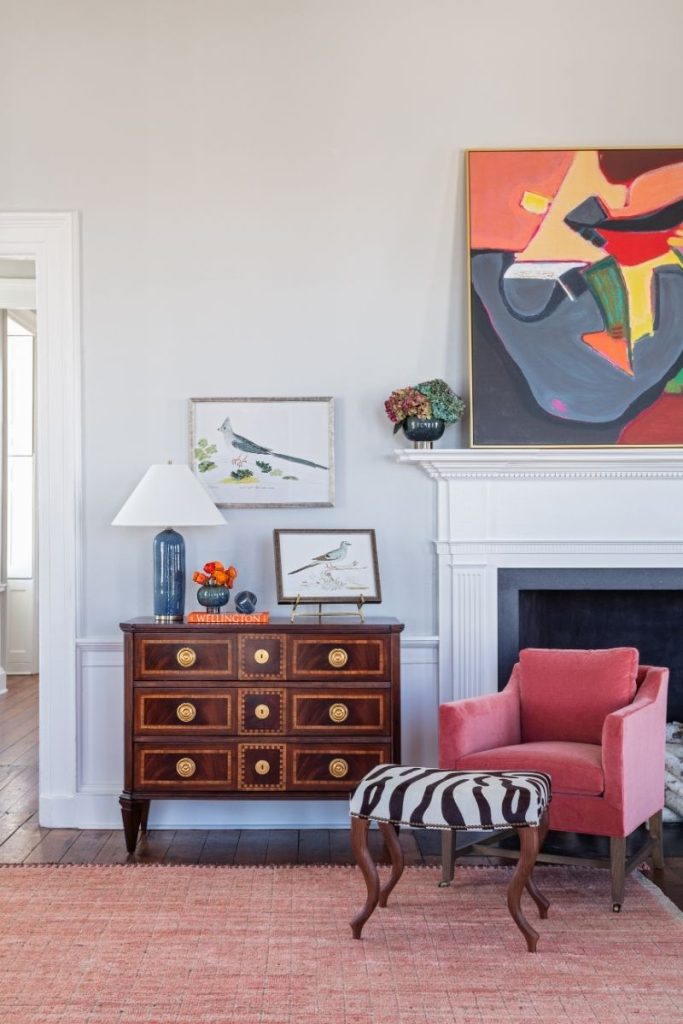
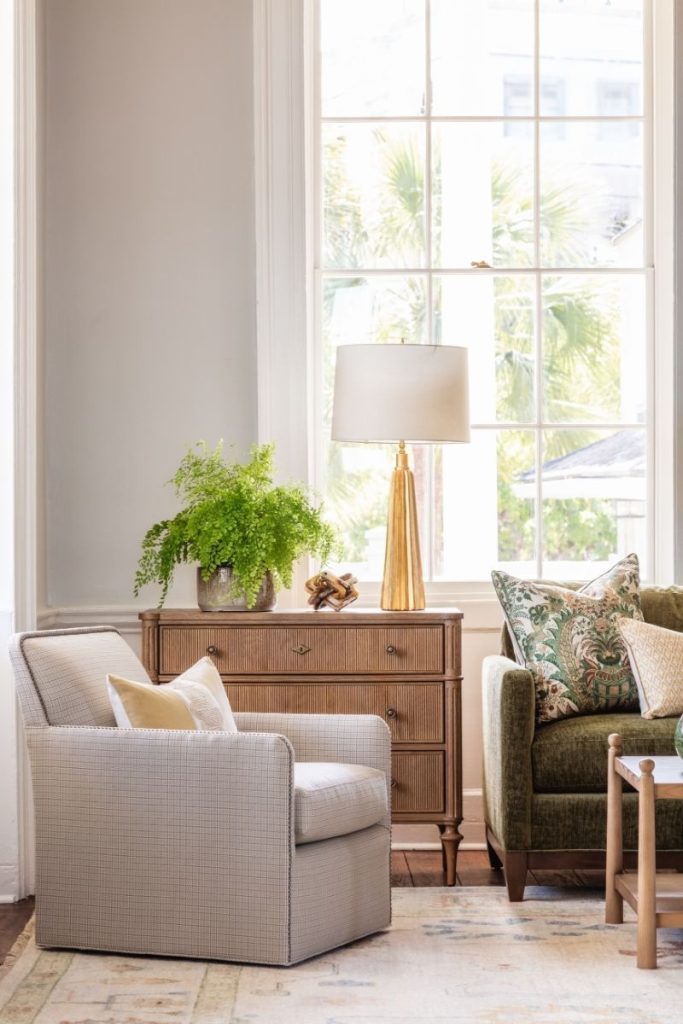
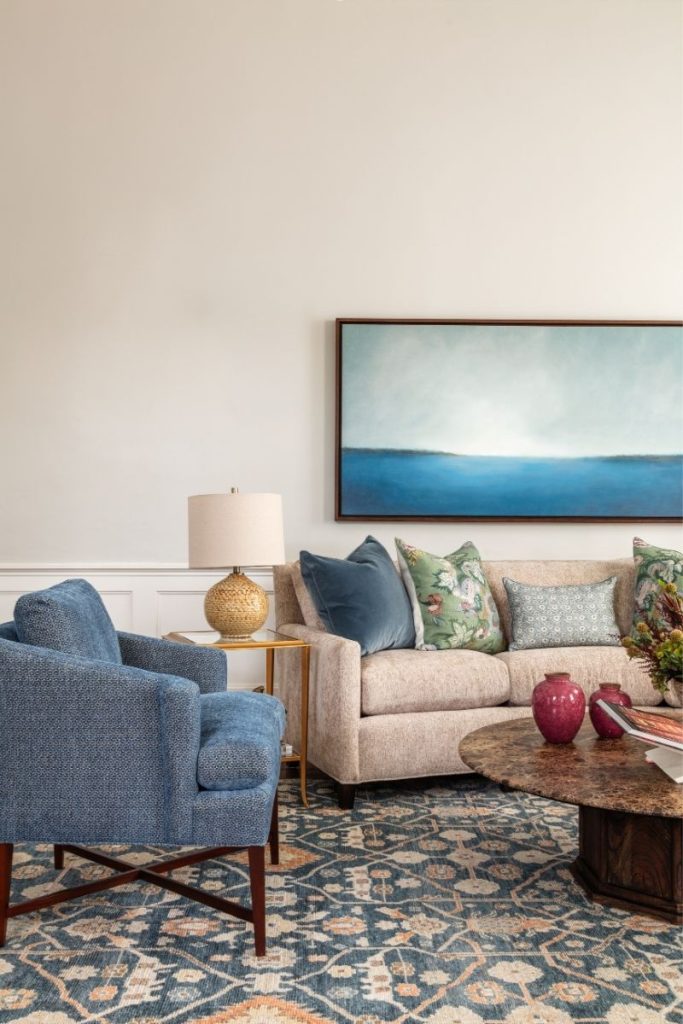
Bold color is the most immediate way to give an accent chair some personality, and it is often the easiest place to start. A soft blue, a warm coral, a deep olive, or a sunny yellow all read as a welcome surprise on a single chair without overwhelming the space.
Some people like working from the 60-30-10 idea, where a dominant color covers most of the room, a secondary color supports it, and a final color appears in small doses. An accent chair fits neatly into either of the smaller two.
Whatever color you land on, echo it somewhere else: a pillow across the room, a thread in the rug, a note in a piece of art. That repetition is what makes a bold chair feel deliberate rather than misplaced.
Play With Pattern, Texture, and Shape
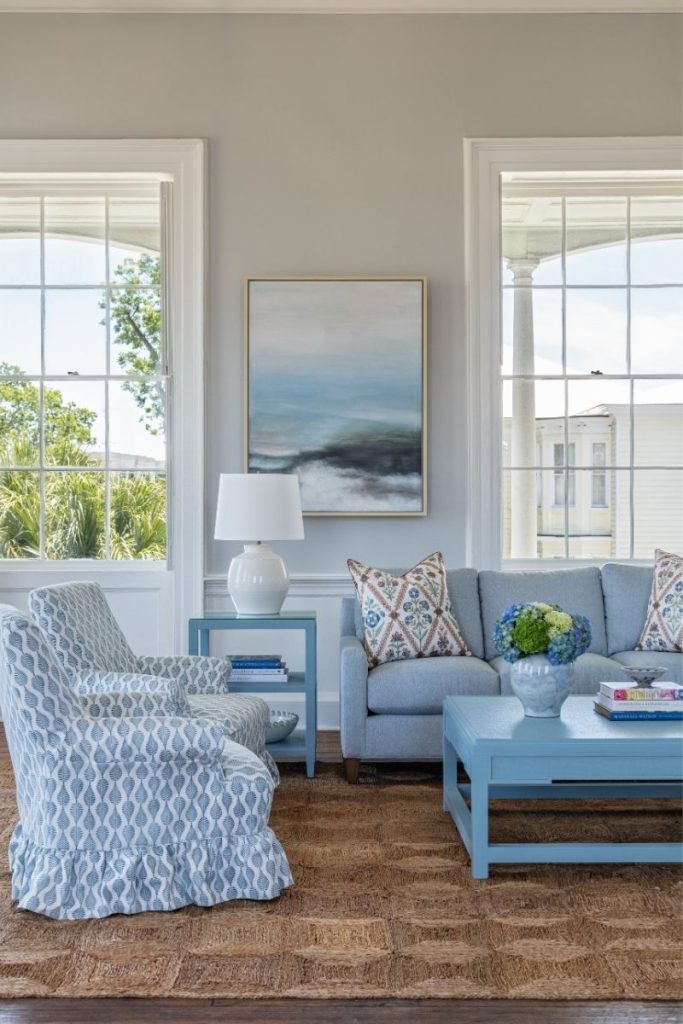
A patterned chair brings similar energy as a pop of color, and mixing patterns is often easier than people expect.
The loose version of the rule: keep it to a few patterns in one seating area, vary their size so they aren’t competing for the same attention, and let them share a color or two. Pairing unlike with unlike helps as well, since a floral next to a stripe is far easier to pull off than two florals.
Texture belongs in that count too. A bouclé, a nubby weave, or a cut velvet contributes visual interest without adding a print, which makes it a good option if the room already has plenty going on.
Then there is shape. A curved back reads softer and more relaxed than clean tailored lines, and either one changes the feel of a corner before you get to the fabric at all.
Try a Style You Would Not Commit to Elsewhere
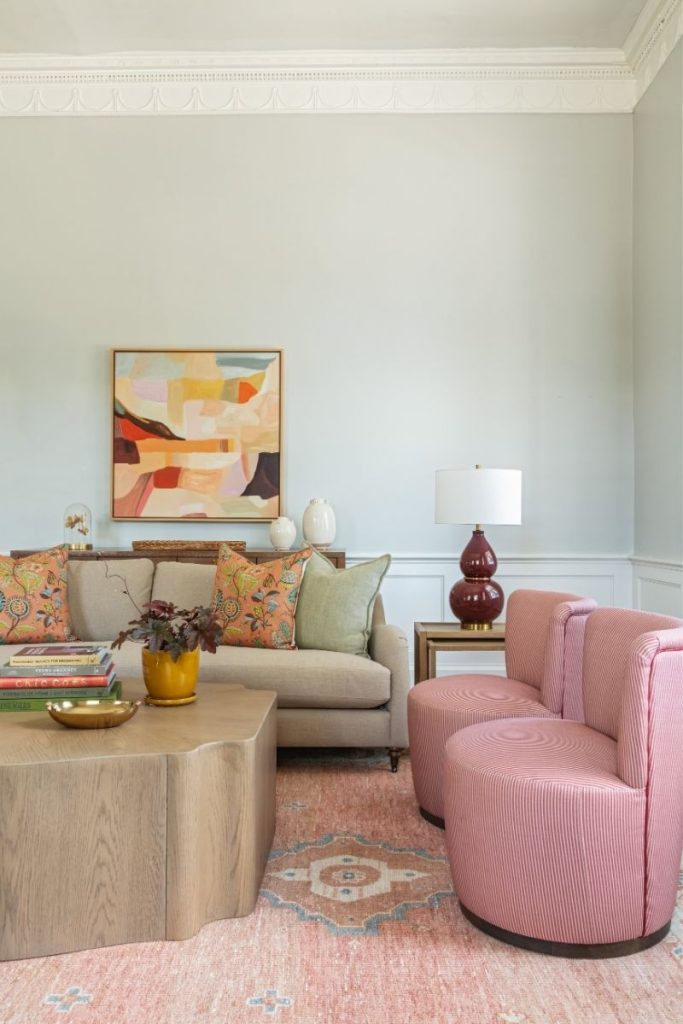
A chair is also a low-stakes way to bring in a style you like but wouldn’t build a whole room around. Something sculptural, something ornate, some mid-century modern flair, a bit of Hollywood Regency polish: in a single chair, any of these register as a flourish rather than a theme.
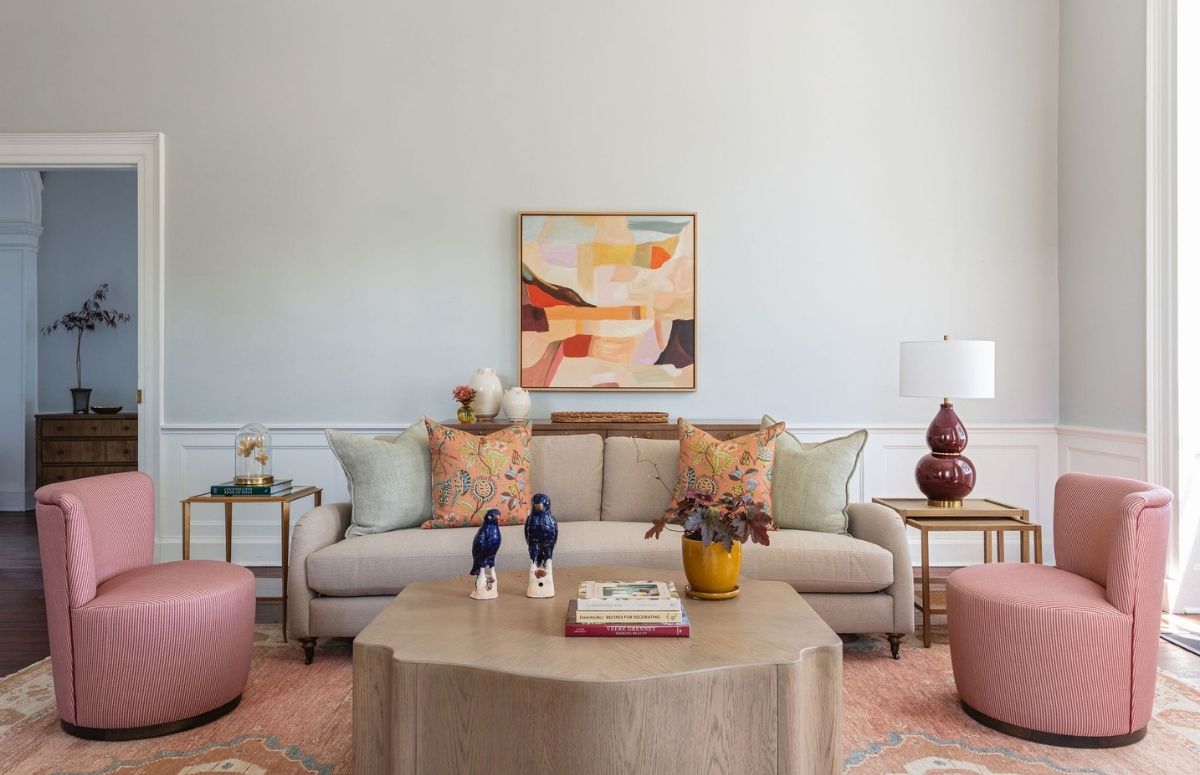
A curved swivel with a low pedestal base can sit comfortably in a traditional room without turning it modern. A carved frame or a cabriole leg can bring in a little formality without making the space feel stuffy. The chair introduces the idea, and the rest of the room decides how far it travels.
A pair of accent chairs does something slightly different from a single chair here. Two matching chairs in an unexpected style feel intentional in a way one can’t quite manage on its own, and they give the room a bit of symmetry to balance the surprise.
Skirted, Slipcovered, or Showing a Little Leg
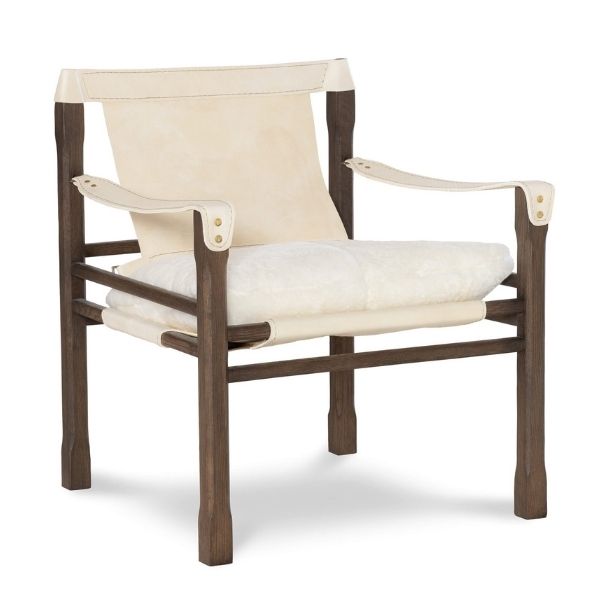
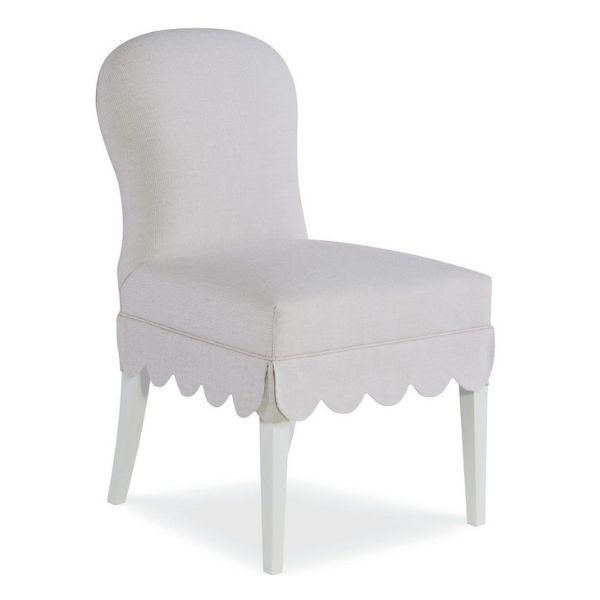
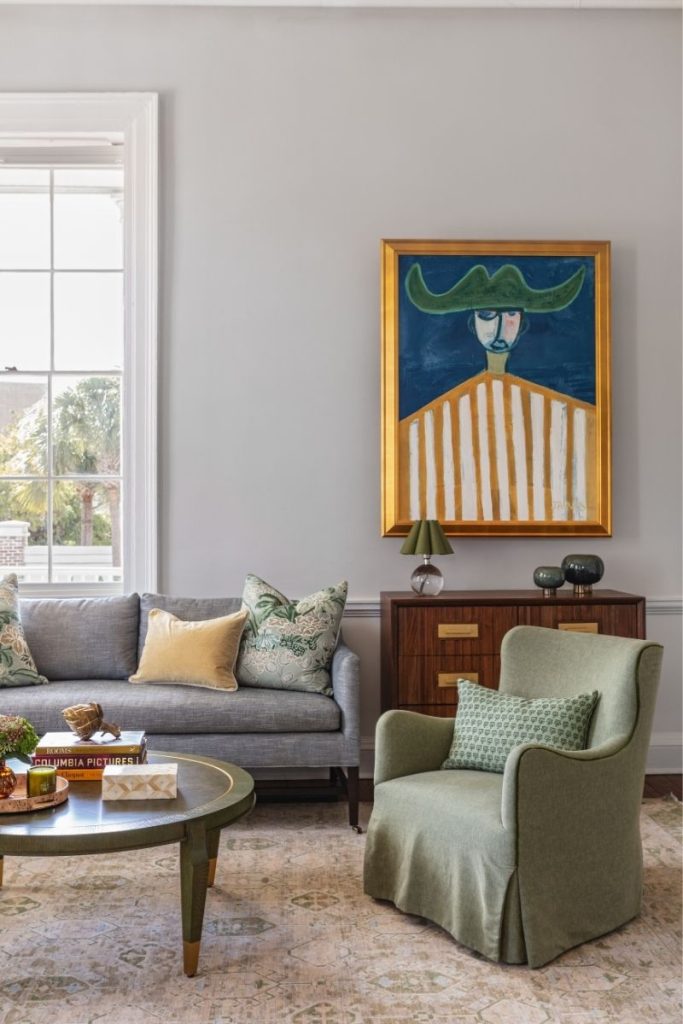
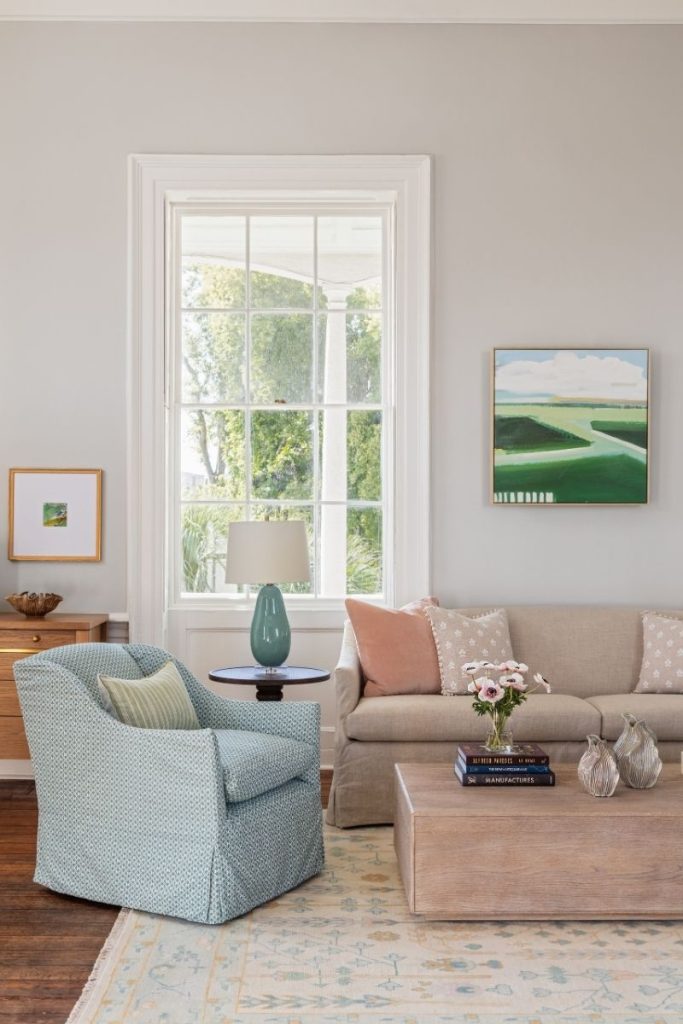
The bottom of a chair does more work than it gets credit for. Exposed legs let floor and light show through underneath, which keeps a piece feeling lighter and can make a smaller room feel more open. A skirt or an upholstered base does the opposite, grounding the chair and giving it a more settled presence. Slipcovers usually fall on the skirted side, with the added appeal of a relaxed look and a cover that comes off for washing.
Before you choose, take a look at the rest of the room. If your sofa, tables, and console all stand on visible legs, a skirted chair adds some welcome weight. If most of your furniture already sits low and solid, a chair on slim legs opens things back up.
Consider a Swivel Accent Chair
A swivel chair is less a style choice than a question of how you actually use the room. If a chair sits where someone might want to face the sofa during a conversation, the television during a movie, and the window or the kitchen the rest of the time, a swivel handles all of it without anyone dragging furniture around.
As you shop, bear in mind that a swivel tends to show its back more often than a fixed chair does, especially in an open room. Take a look at the back before you buy to make sure you like the chair from every angle.
Where to Put an Accent Chair in a Living Room
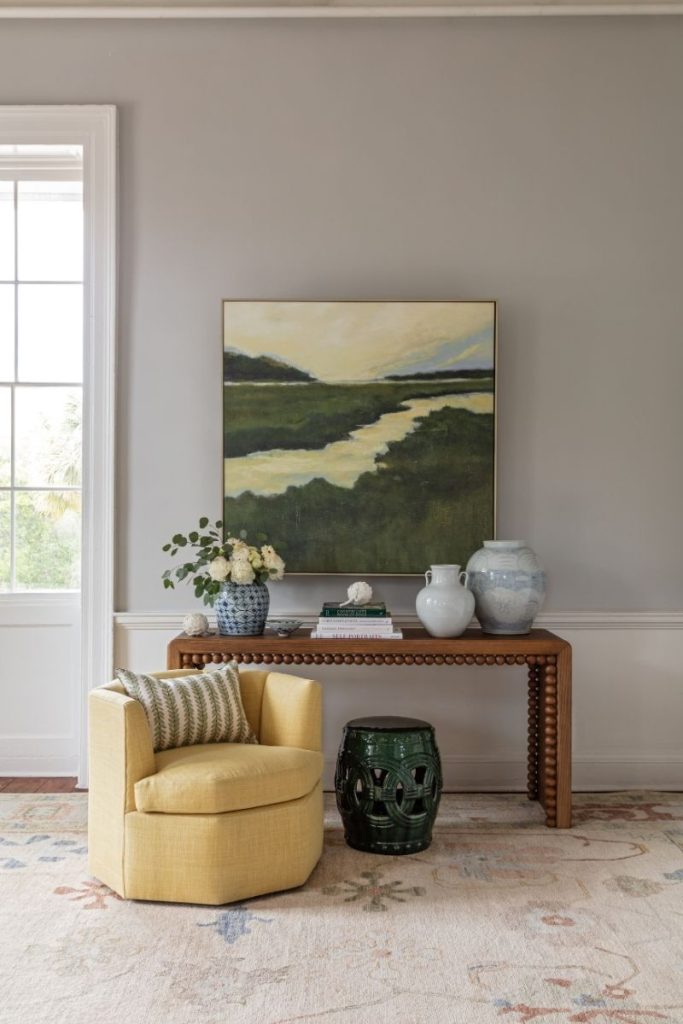
There is no single right place for your accent chair, which is part of the fun. A chair angled toward the sofa makes conversation easy. Tucked into a corner, it fills space that otherwise sits empty. Centered between two windows, it gets a natural frame. Pulled up beside a console or set at the edge of an open room, it marks the boundary between one area and the next.
A chair is also one of the few pieces light enough to try in multiple places before committing, so move it around and see which arrangement you like the most.
Wherever it ends up, leave comfortable room to walk around it. A chair that people have to squeeze past will get moved eventually, no matter how good it looks in that spot.
Styling an Accent Chair Beyond the Living Room
An accent chair is one of the more versatile pieces you can buy, and it isn’t limited to any one room or placement.
Home office. A comfortable chair away from the desk gives you somewhere else to sit when you need a break from your screen.
Bedroom. A chair by the window is a nice place to sit with your coffee in the morning or to read before bed.
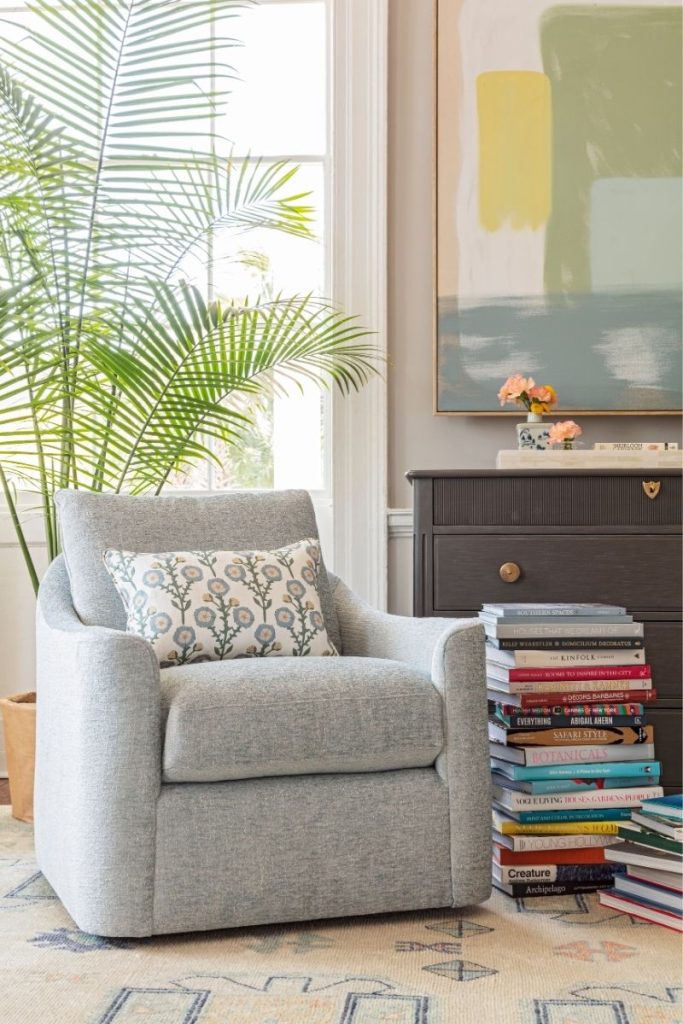
Reading nook. Pull a comfortable chair into a quiet corner, add a lamp and a small table, and you have somewhere to settle in with a book.
Dining room. Two chairs on either side of a console table look great and give you extra seats when you need them.
Entryway. A chair by the front door gives you a place to set down your purse or sit while you put your shoes on.
Personalize Your Accent Chairs With GDC Home
Once you have a sense of the direction you want, the rest comes down to finding the chair that fits it. That’s where GDC Homes can help.
We’ve been furnishing Lowcountry homes across our Mt. Pleasant, Kiawah Island, and Charleston furniture stores since 1978. Our showrooms are stocked with accent chairs from makers we trust, in frames and fabrics you won’t find at every furniture store in town. You’ll also find the sofas, rugs, lighting, and art to build a room around them. If nothing on the floor is quite right, our custom upholstery options let you choose the fabric, frame, and finish yourself.
Our upholstery sale is on now, which makes now the perfect time to choose and style an accent chair. From August 17th through the 31st, you can save 20% on all upholstery, including in-stock, custom-order, and clearance, at all three showrooms. This discount does not apply to prior purchases and cannot be combined with other offers.
And if you would rather not narrow it down alone, our interior design team is glad to help.
Come see us in Mt. Pleasant, Kiawah Island, or Charleston, and let’s find the chair that finishes your room.
Shop the Look

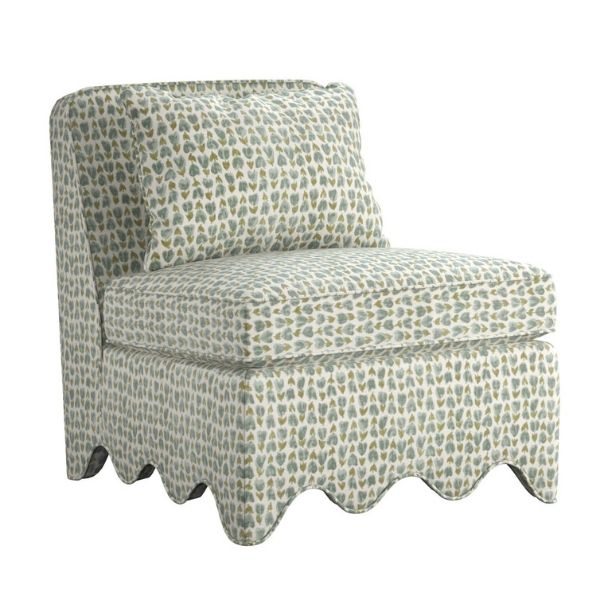
Lowry Accent Chair
A colorful accent chair with a scalloped base and softly patterned upholstery. Playful shape, gentle hues, and a lumbar pillow that comes along for the ride.
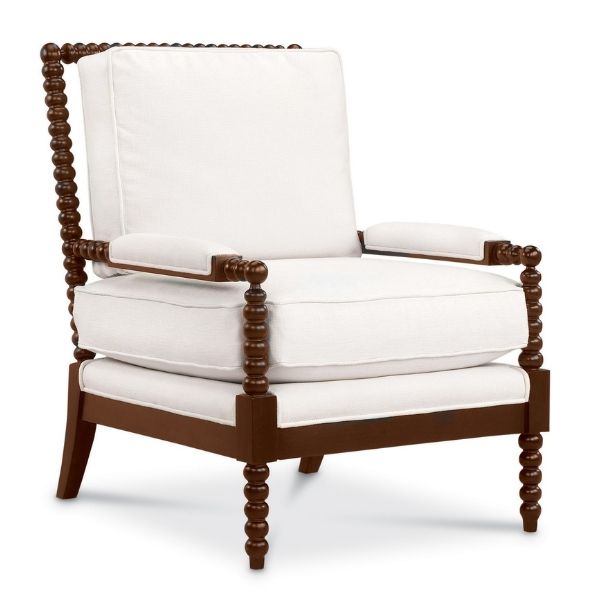
Charleston Chair
Exposed bobbin frame in a warm Sedona finish, welted upholstery, and a classic silhouette that settles comfortably into almost any room.