

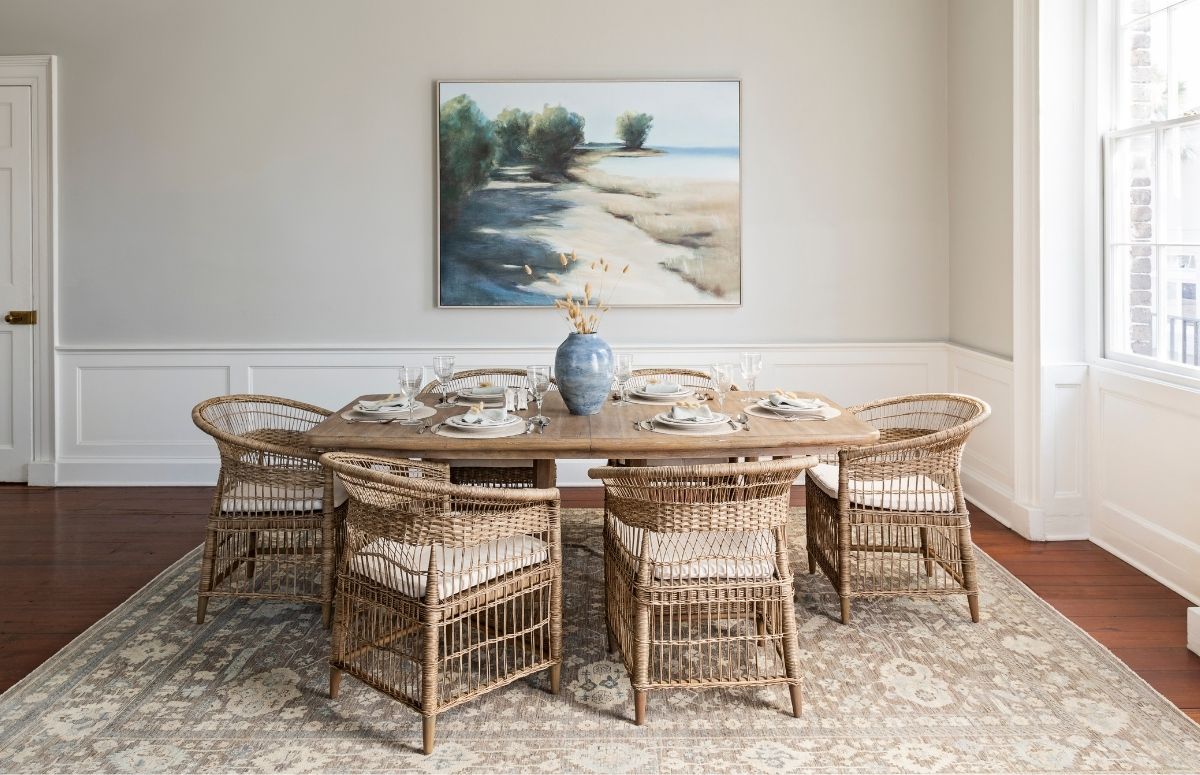
The dining room holds a special place among the many rooms in a home. It’s where milestones are celebrated, where families gather at the end of the day or during holidays, and where guests feel welcomed. However, it’s often overlooked in the interior design process and treated as a transitional space rather than a room with a defined purpose of its own.
At GDC Home, we approach coastal dining room design with a clear purpose in mind. A well-designed dining space does more than look beautiful. It encourages people to gather, converse, and connect, creating memories that last a lifetime. Below, our interior design team shares the principles we follow when designing coastal dining rooms that encourage conversation, connection, and the art of gathering.

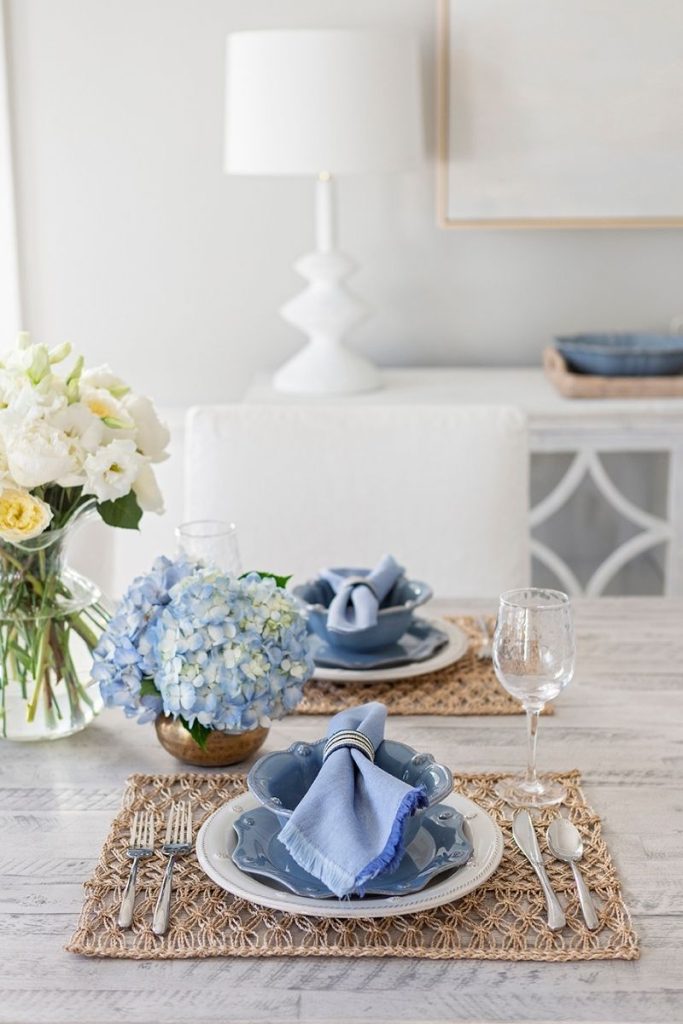
Decide How Your Coastal Dining Room Will Be Used
Before selecting any material or finish, it’s important to understand how you will use the room. Some households prioritize small, intimate dinner spaces for four to six people, while others need a room that can comfortably seat twelve or more people for holidays and special occasions. Some homes call for formal, seated dinners, while others are designed around a more casual experience. We believe custom design should be guided by lifestyle rather than the square footage alone.
In the Lowcountry specifically, coastal dining room design often needs to account for indoor-outdoor flow, given the presence of piazzas, courtyards, and garden spaces that extend beyond the interior. It also often requires working within the constraints of historic homes, which may have narrower floor plans, original architectural details, and fixed elements such as doorways, windows, and built-in millwork. Effective, expressive design works within these constraints rather than against them.
Select the Right Dining Room Table
The dining room table anchors the room, both functionally and visually.
Shape has a powerful effect on how a room feels. Round and oval tables improve sightlines between guests for an inclusive atmosphere. Rectangular tables read as more formal and fit larger groups more efficiently. For households seeking flexibility, rounded-end rectangular tables or designs with concealed leaves offer both formality and intimacy as needed.
Sizing plays a key role in your coastal dining room’s comfort. A few general guidelines:
- Allow 36 inches of clearance on all sides of the table to give people room to move.
- Allot 24 to 28 inches of seat width per person so each guest has enough elbow room.
Material is where a table takes on real character. Reclaimed wood offers warmth and a sense of history, well suited to Southern Vernacular homes. Marble reads as timeless and formal, and live-edge designs introduce an organic element that works well in coastal dining rooms.
Prioritize Seating Comfort and Flexibility
One of the main purposes of good dining room design is to make sure that guests feel comfortable and can remain seated at the table for an extended period of time.
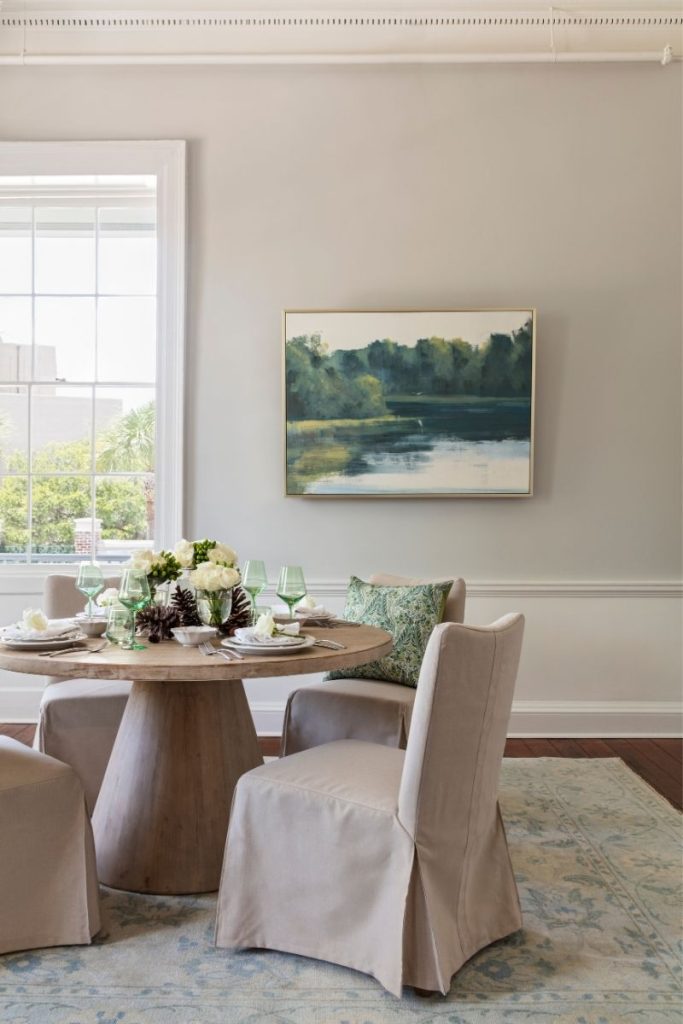
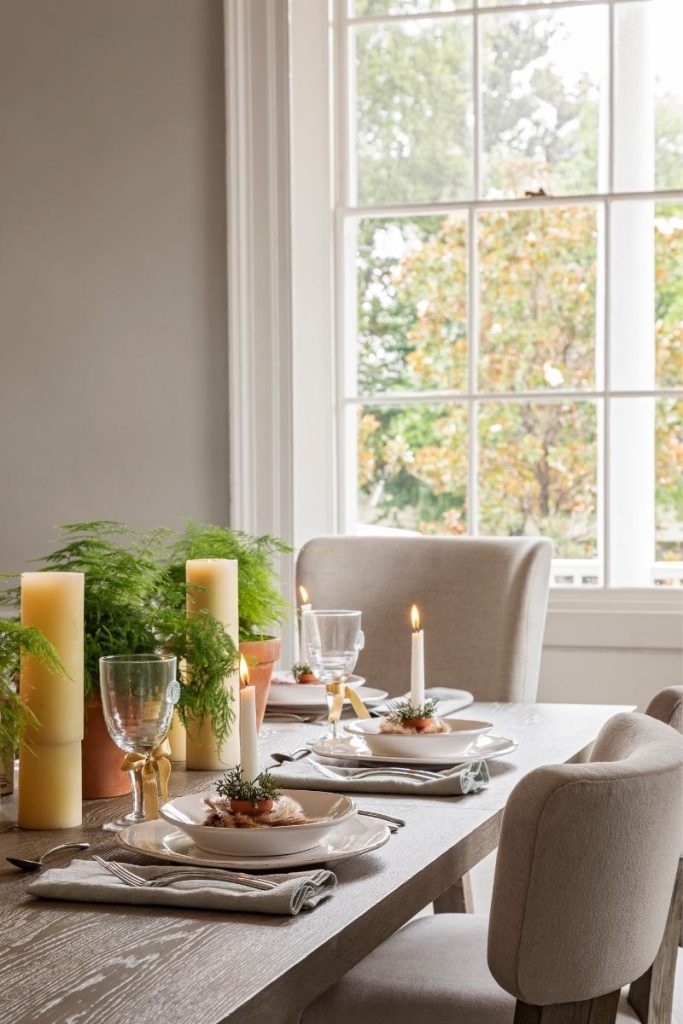
Upholstered seating is the key to creating that comfort, allowing guests to remain relaxed and engaged for longer. Mixing seating types, such as a bench along one side paired with upholstered chairs on the other, can add visual attention while balancing formality and everyday functionality. Armchairs at the head of the table are a subtle way to distinguish the host’s seat, as well.
Flexibility is equally important. Extendable tables, along with additional stackable or foldable chairs stored nearby, allow a room to adapt easily to varying group sizes without settling on one fixed layout.
Design Your Dining Room’s Lighting in Layers
Lighting is one of the most significant and frequently overlooked elements of dining room design.
A layered approach works best:
- A statement fixture to anchor the room
- Dimmable overhead lighting to adjust mood throughout the day
- Task lighting over a sideboard or bar area
- Candlelight as a final layer for ambient entertainment
As a general guideline, lighting fixtures should hang 30-36 inches above the table and be sized to roughly one-third of the table’s width.
The tone of lighting also plays an important role in setting the mood of the dining room. Warmth matters more than overall brightness. A color temperature in the range of 2700K to 3000K tends to be the most flattering for both skin tones and food presentation and contributes significantly to a room’s overall sense of comfort.
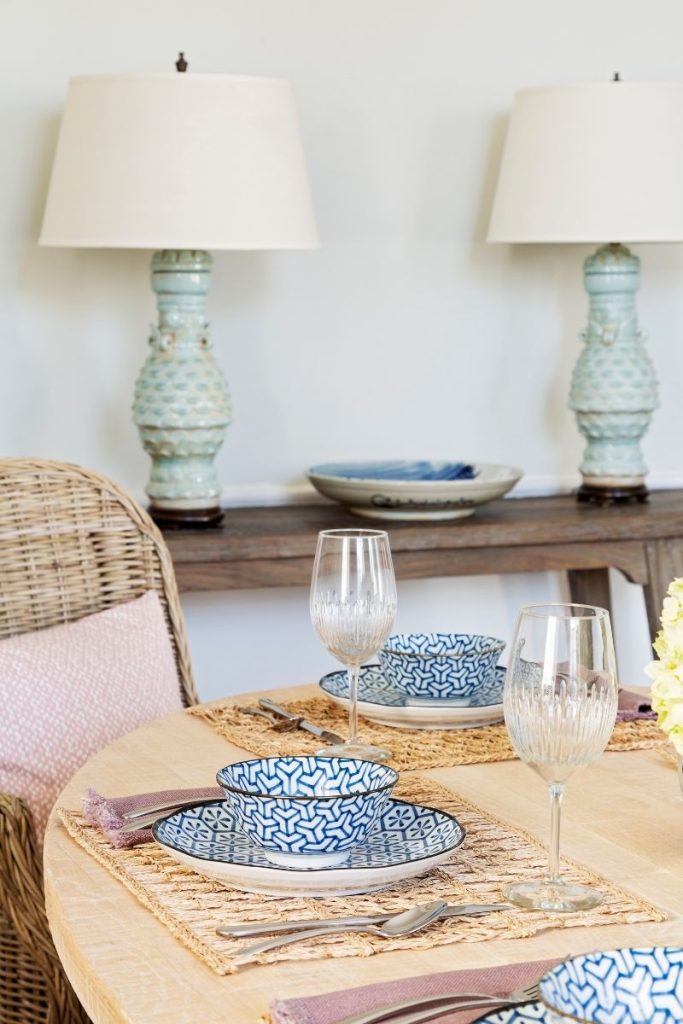

Include Sensory Details in Your Coastal Dining Room Design
Even smaller design choices can help shape a room’s atmosphere, giving guests something to appreciate and, often, something to talk about.
Curated wall art and table decor add visual character and can be rotated as the seasons or your home’s design themes change over time. Textiles round out the sensory profile of a room, while rugs soften hard flooring and absorb sound — a particularly useful quality in a space designed for conversation.
Finally, color palettes play an important role in shaping a room’s feel. Deeper, saturated tones such as greens, terracottas, and navies tend to create warmth and closeness, while cooler, more minimal palettes lean toward understated elegance. Color also has a documented effect on perceived hospitality and appetite, making it worth considering carefully alongside the room’s other design elements.
Personalize Your Coastal Dining Room Design with GDC Home
Whether you’re starting from a blank room or reimagining a space that’s never quite felt right, GDC Home’s design team is here to help bring your coastal dining room to life. From table and seating selection to the finishing details that make a room feel like yours, we work alongside you at every step, drawing on decades of experience designing for Lowcountry homes. Schedule a design consultation at our Charleston/West Ashley, Mount Pleasant, or Kiawah Island showroom to start the conversation.
Prefer to explore at your own pace? Our showrooms and online collection are filled with dining tables, seating, lighting, and decor ready to help you build the gathering space you’ve been imagining, whether you’re furnishing an entire room or simply searching for the one piece that ties it together. Visit our furniture and decor stores in person to see the craftsmanship and materials up close, or browse our curated selection online anytime. However you choose to begin, we’re here to help you create a dining room built for connection.
Shop the Look

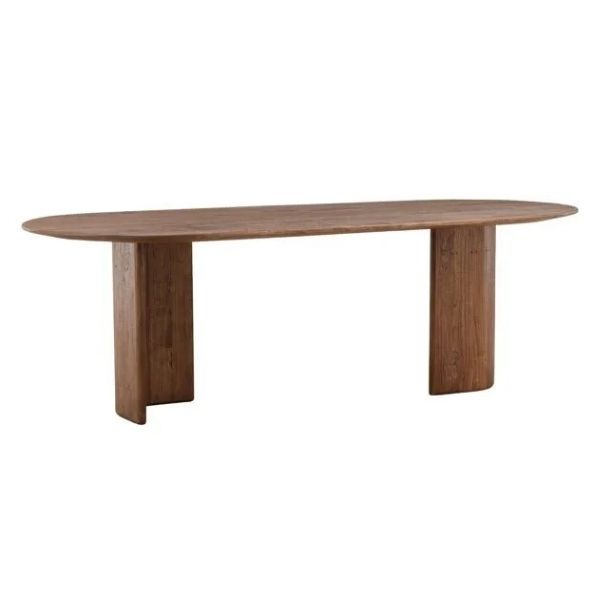
Alpine Dining Table
This rounded-end rectangular dining table offers space and flexibility, with a bold, architectural look that ties a dining room together.

Walsh Upholstered Dining Chair
These upholstered dining chairs feature a sculptural silhouette and luxurious upholstery to add a touch of sophistication to any coastal dining room.

