You can tell when a bed has been styled rather than just made. The layers sit differently, the pillows look arranged instead of stacked, and the whole thing reads as finished. Learning how to style a bed is mostly a matter of knowing what each layer is there for, how they work together, and when to stop.
There are four main layers to a bed, and the pieces themselves are straightforward. Sheets, a layer for warmth, pillows, and a blanket or throw across the foot of the bed. The decisions inside them are what tend to stall people out, like whether a duvet or a coverlet makes more sense, how many pillows is too many, and whether a throw looks better folded or draped.
Below, we’re walking through each bedding layer step by step, from the sheets up, along with the little decisions that make the difference between a bed that’s made and a bed you can’t wait to climb into.

Start With Sheets and Pillowcases
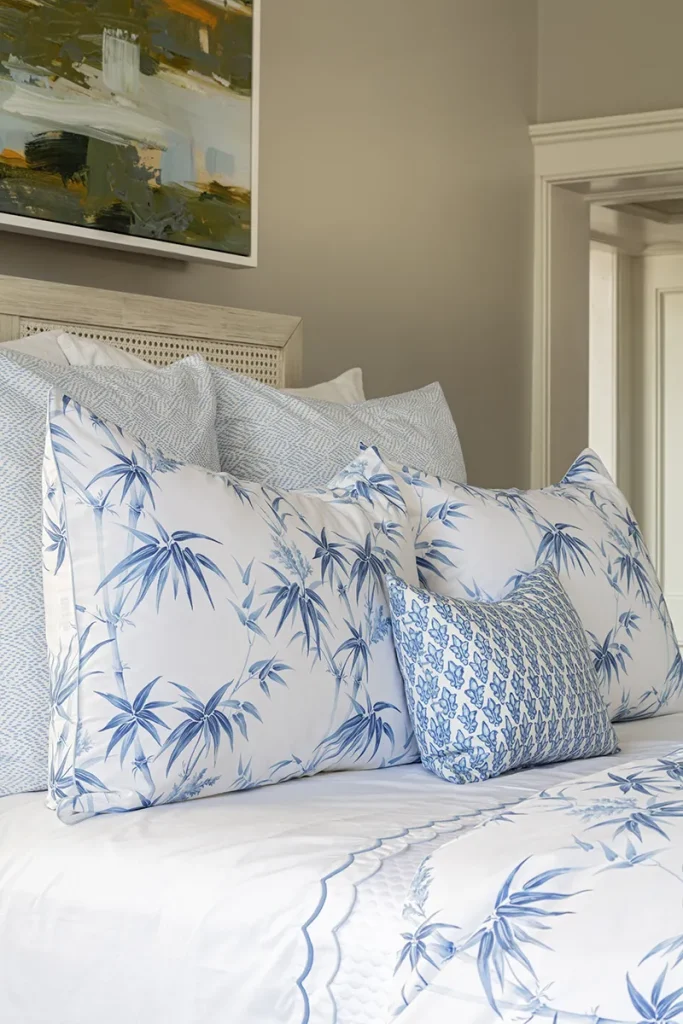
Sheets and pillowcases are the layer people often rush past fastest, but they set the tone for everything stacked on top. Cotton feels crisp and cool, linen feels relaxed and a little undone, and blends split the difference between the two.
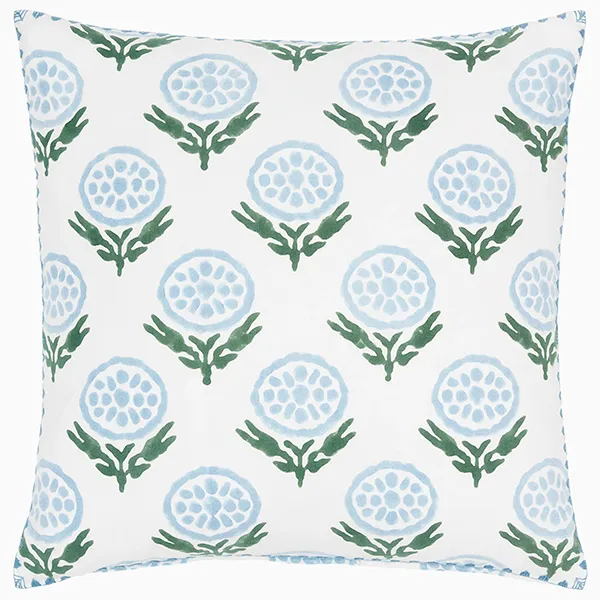
Color matters here too, even though most of the sheet ends up hidden under the layers that follow. A crisp white keeps things simple and lets everything above it stand out. A soft neutral or muted tone gives you a head start on a coordinated palette instead of fighting one later. A pattern or print adds visual interest to a solid color top layer.
Duvet, Coverlet, or Quilt for the Mid-Layer
This is the step that trips up most people, since the terms get used interchangeably even though the pieces work differently. For a refresher on these types of bedding, check out our guide to the differences between a bedspread, comforter, quilt, coverlet, or duvet. A few quick differences to note:
A duvet is an insert-and-cover system, which makes seasonal changes easy. Swap the cover instead of buying a whole new duvet, and you’ve changed the whole look of the bed.
A coverlet or quilt is lighter and more structured, often reversible. It works well on its own in a warmer climate like Charleston, or layered with a duvet once the temperature drops. Both coverlets and quilts are worth having on hand for exactly that reason.

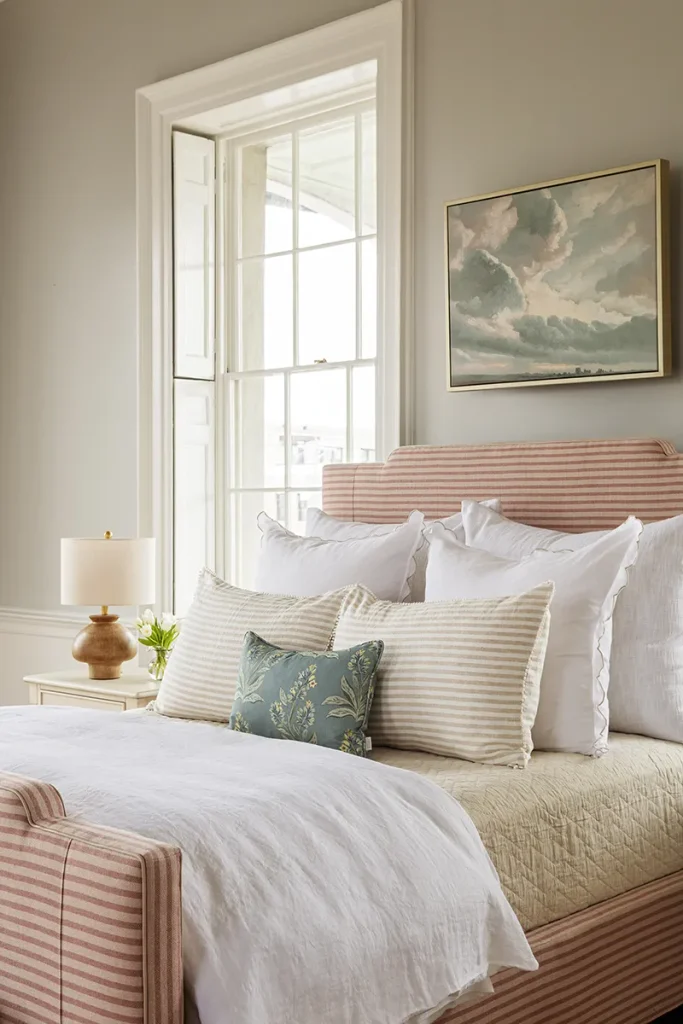
How Many Pillows a Bed Actually Needs
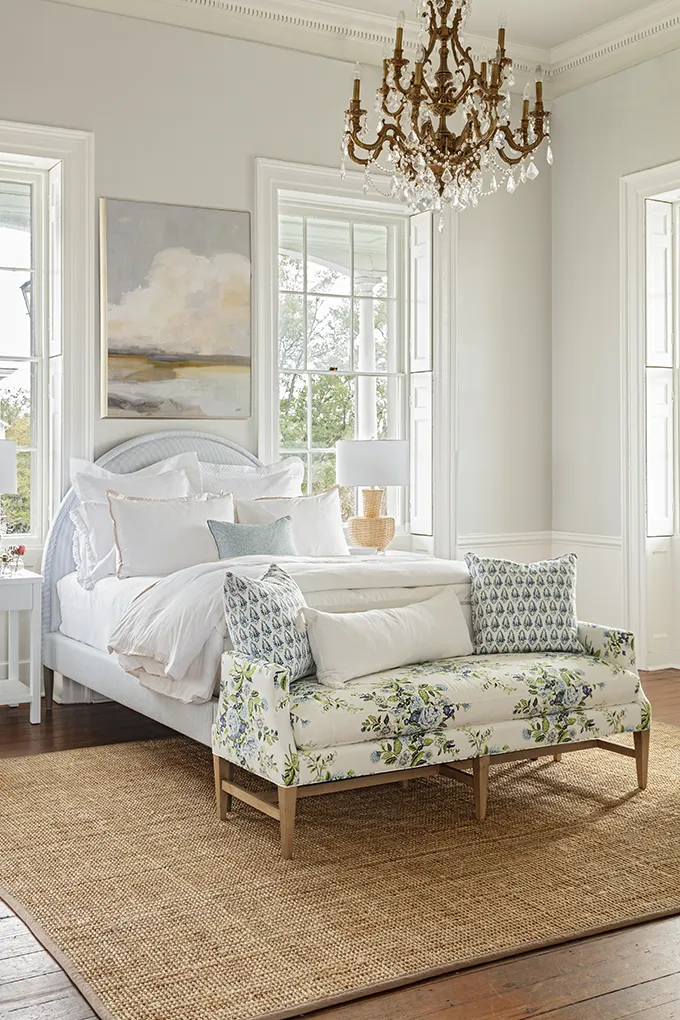
Pillows are where bed styling often goes wrong in one of two directions: too flat, with just the sleeping pillows, or too fussy, with more decorative pillows than anyone will ever move at night. A simple order helps:
Sleeping pillows first, pushed to the back
Euro shams standing upright in the middle
Standard or queen shams for an extra pop of pattern and texture
One or two accent pillows or a lumbar pillow up front for a finishing detail
An easy rule of thumb: stick to odd numbers, and mix one pattern, one texture, and one solid so your bedding accent pillows do their job without competing with each other.
If you’re not sure where to stop, stop one pillow sooner than feels natural. It’s easier to add another accent pillow later than to talk yourself out of one that’s already on the bed.
Where the Blanket or Throw Goes on the Bed
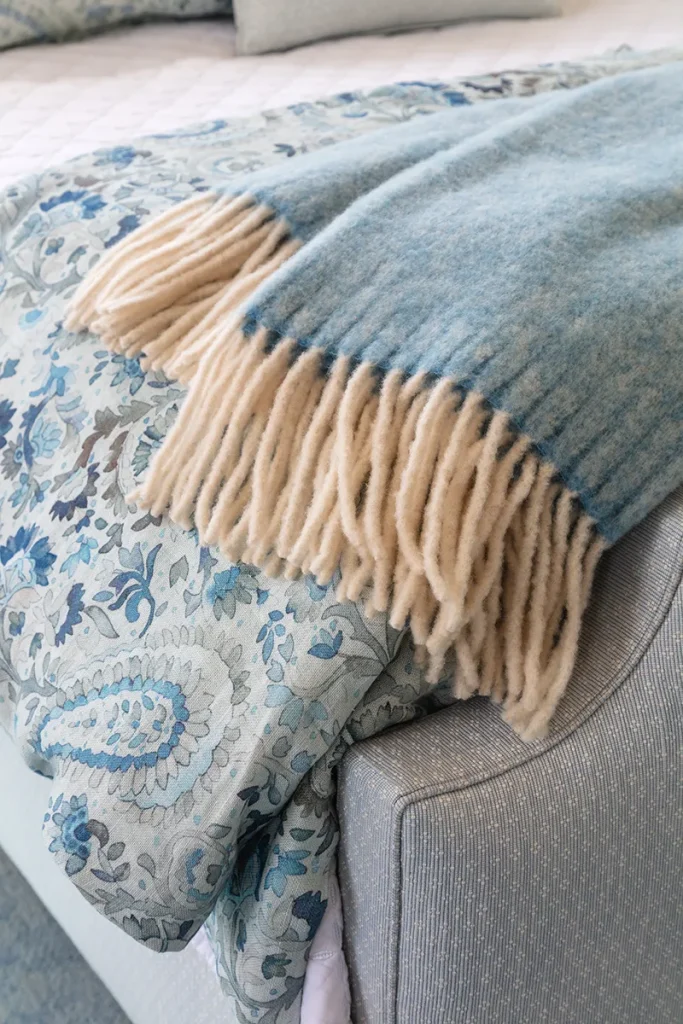
A few of our favorite ways to style a bed with blankets and throws:
Fold it in thirds and lay it horizontally across the foot of the bed for a tailored look
Drape it diagonally across one corner for something a little more relaxed
Lay it loosely along one side, as if someone just set it down
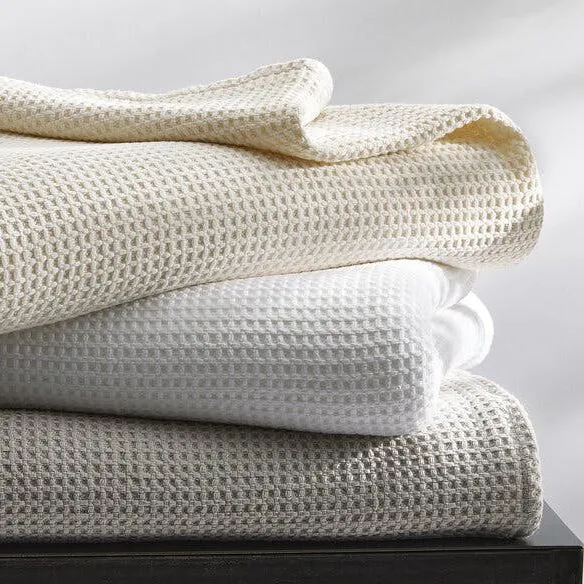
Whichever way you go, pick a throw that contrasts in texture with the rest of the bed. That contrast is what makes blankets and throws feel like a deliberate finishing touch rather than an afterthought.
How to Layer Pattern, Texture, and Color
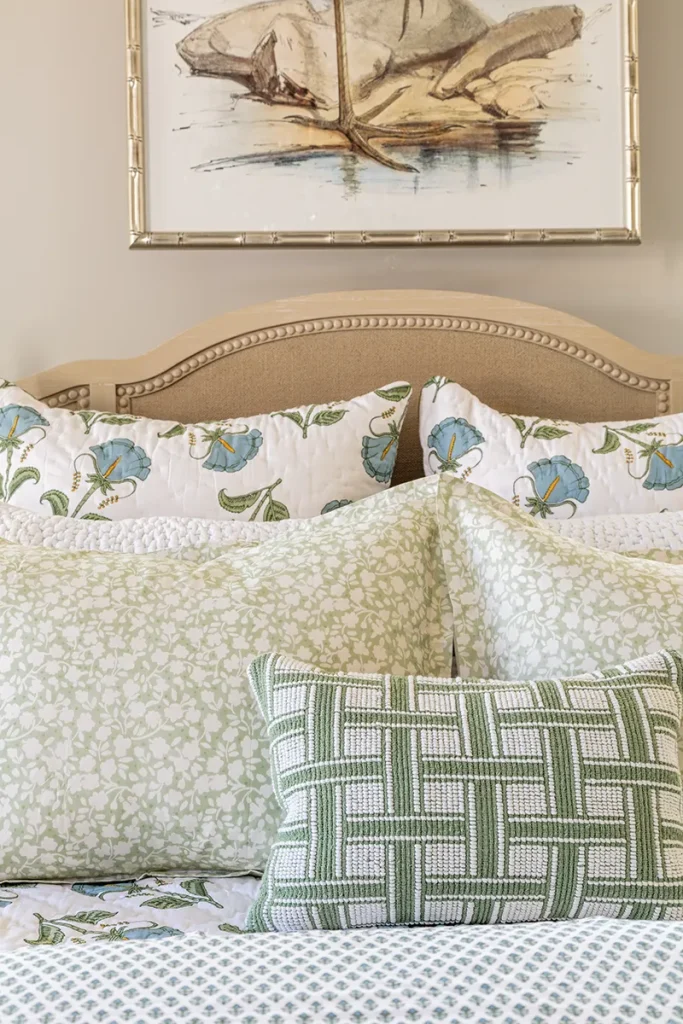
Cap yourself at two or three patterns per bed, anchor the whole arrangement to one neutral, and let texture carry more of the visual interest than pattern does.
That last part matters more than people expect. Layered bedding in all solids, but in three or four different textures (a nubby knit, a smooth sateen, a linen weave) often looks more curated than one with several bold patterns competing for attention.
A quick test: if you can’t easily describe the bed’s color story in one sentence, it’s probably carrying too much pattern. When in doubt, add texture before you add another print.
Color and pattern on the bed follow whatever the rest of the room is doing. If the palette itself is still up for debate, our roundup of 2026 bedroom design trends covers where those decisions are heading this year.
Changing the Bedding Layers by Season
Your base sheets can stay the same all year. What changes is the mid-layer and the throw. A lightweight linen duvet cover and a cotton throw work well through the warmer months, while a heavier knit or a velvet-adjacent texture earns its keep once it cools down.
This is also the easiest way to refresh a bedroom without a full redo. Swapping two pieces twice a year keeps the room feeling current, and it’s a lot less commitment than repainting or buying new furniture every season.
Style Your Bed with GDC Home
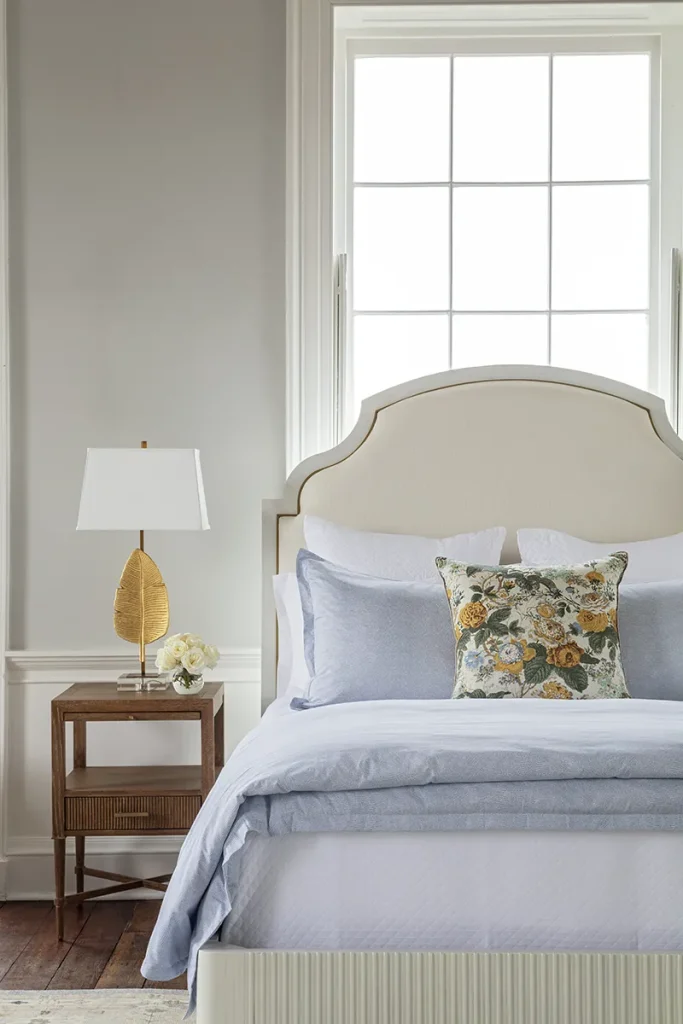
A well-styled bed is one of the easiest upgrades in the whole house, and you don’t have to figure it out alone. Our bedding collection covers every layer this post walks through. Sheet sets in cotton and linen, coverlets and quilts, duvet covers, Euro and standard shams, and throws in enough weights to carry a bed from July to January. Seeing how a sateen reads next to a matelassé is easier with both in front of you, which is part of why we keep the range deep.
Among bedding stores in Charleston, SC, ours is built to be shopped either way. The full collection is online, and our interior design team does in-store consultations and in-home visits if you’d rather work through the layers with someone who does this daily.
Come see us in Mount Pleasant, Kiawah Island, or West Ashley, or find your nearest Charleston home decor and furniture store.
Shop the Look

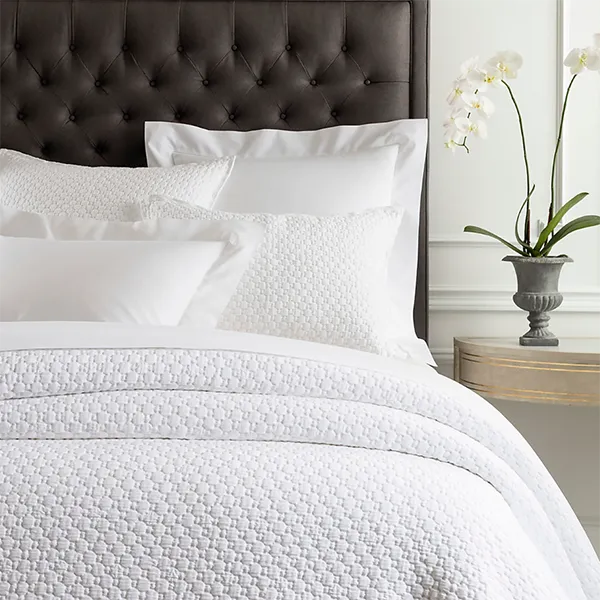
Lodi Matelasse Coverlet
A matelassé weave in 100% cotton, giving it the look of quilting without the bulk. Comes in White, Sand, and Sky for an easy mid-layer that works year-round.
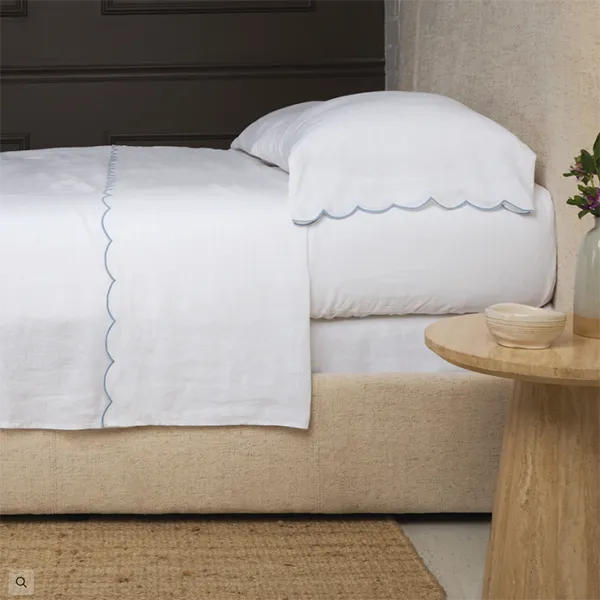
Kelly Linen Sheet Set
100% linen with delicate scalloped embroidery along the edges, softening with every wash. Breathable and moisture-wicking, in five colorways.